An excavator extended boom is a key functional unit that extends the working range of the original machine through structural expansion and system integration. Its core working principle relies on the precise transmission of hydraulic power and the mechanical optimization of the boom structure to complete digging, grabbing, and transporting tasks far exceeding those of a conventional boom while maintaining overall machine stability.
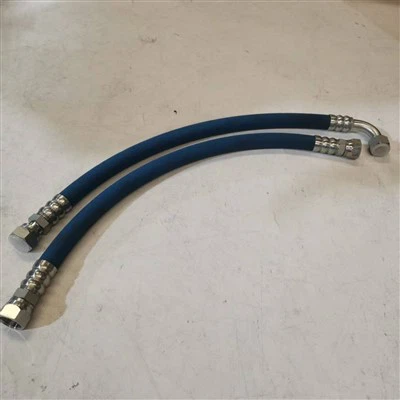
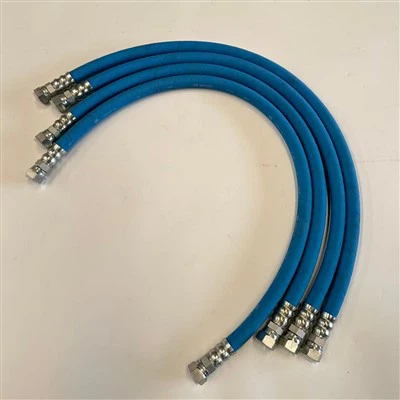
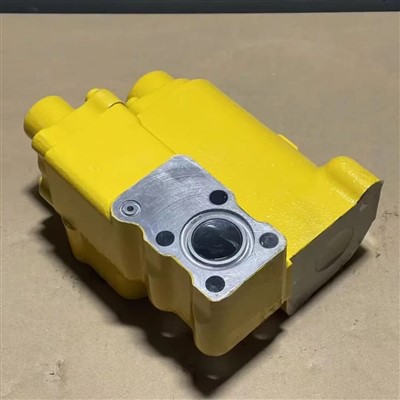
From the power source perspective, the extended boom's movements are uniformly supplied by the main hydraulic system. The engine drives the hydraulic pump to generate high-pressure oil, which is distributed to the dedicated boom cylinder and stick cylinder via the main control valve. Unlike a conventional boom, the cylinder diameter, stroke, and working pressure of the extended boom cylinder need to be rematched according to the load characteristics after the boom is extended. When the operator issues a command via the joystick, the main control valve switches the oil circuit direction, and high-pressure oil enters the rodless or rod chamber of the cylinder, pushing the piston rod to extend or retract, thereby causing the extended boom and extended stick to rotate around the connecting pin, realizing the lifting, lowering, or retraction of the boom. During this process, the flow rate and pressure of the hydraulic system must be adapted to the lever arm effect created by the boom length to avoid sluggish action or system overload due to increased load torque.
From a mechanical perspective, the operation of an extended boom is essentially an extension of the lever principle. For every meter the boom extends, the end-effector radius increases accordingly, but the overturning moment generated by the load also increases geometrically. Therefore, the structural design of an extended boom needs to improve its bending and torsional resistance by strengthening key load-bearing sections (such as the boom root and stick hinge points), using high-strength alloy steel, and optimizing the cross-sectional shape (such as a box-type structure). Simultaneously, the main engine needs to balance the center of gravity shift caused by the extended boom by adjusting the counterweight, reducing the working radius, or limiting the maximum load to ensure overall machine stability.
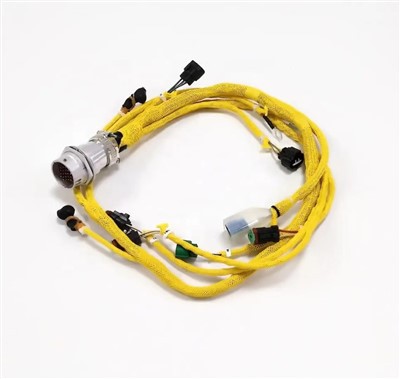
In actual operation, the coordinated operation of multiple actions of the extended boom (such as simultaneous boom lifting and stick extension/retraction) relies on the flow distribution logic of the hydraulic system. The main control valve proportionally adjusts the oil intake of each cylinder to coordinate the speed and force of different actions, preventing boom swaying or load loss due to asynchronous actions. Some intelligent extended booms also integrate attitude sensors to monitor the boom angle and cylinder pressure in real time. The electronic control system then corrects operating commands, further improving accuracy and safety.
In short, excavator extended booms expand the working range through precise hydraulic power, reinforced structural mechanics, and dynamic system synergy. Their working principle is a deep integration of mechanical transmission, hydraulic control, and engineering mechanics, providing crucial technical support for efficient construction under complex conditions.