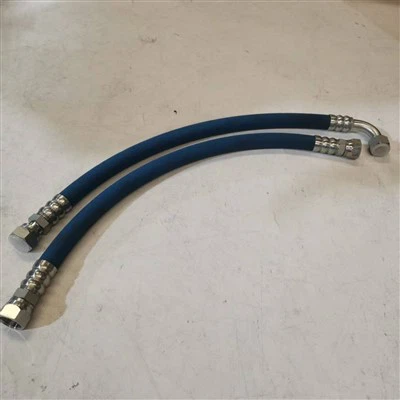
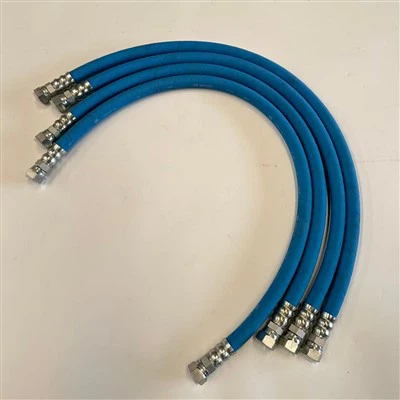
Recently, safety inspections across the construction machinery industry have revealed that numerous excavator failures stem from unqualified aftermarket replacement parts. Notably, inconsistent quality and non-standard installation of Excavator Hydraulic Hose have become a frequent safety hazard on construction sites, drawing widespread attention from the industry and construction teams. As a core part of an excavator's hydraulic system, the reliability of Excavator Hydraulic Hose directly determines equipment operating safety and the personal safety of construction workers.
It is common for hydraulic hoses to age, wear out and leak when excavators work under long-term high intensity and heavy loads, making aftermarket replacement a regular maintenance practice. However, some irregular service providers cut costs by adopting cheap inferior parts and simplifying installation procedures, leaving major safety risks. Such substandard hoses feature weak pressure resistance and poor anti-aging ability, failing to withstand the excavator's high-pressure hydraulic environment. They are highly likely to suffer oil seepage, bulging or even bursting during operation.
Industry maintenance experts point out that most sudden hose burst accidents on sites are linked to unqualified aftermarket replacements. When high-pressure hydraulic oil sprays out instantly, it will paralyze the equipment's hydraulic system, delay projects and cause oil waste. The splashing oil mist may even trigger fires, and easily injure or burn on-site staff. Meanwhile, improperly installed joints and messy pipeline layouts will accelerate hose wear, shorten service life and lead to repeated faults and repairs.
To address these risks, industry regulators emphasize that excavator aftermarket maintenance must prioritize part quality. Only original or certified compliant products shall be used for Excavator Hydraulic Hose, and inferior accessories must be completely rejected. All replacement work should be performed by professional technicians. After installation, pressure and tightness tests are required to eliminate hidden dangers. Construction companies also need to set up equipment maintenance records and conduct regular inspections on hose conditions. Full-process safety management covering part selection, installation and daily checks will effectively prevent accidents caused by maintenance flaws and guarantee the stable and safe operation of construction machinery.
 English
- English
- Français
- Deutsch
- 日本語
- Italiano
- Español
- Português
- русский
- Norsk
- 한국어
- Cymraeg
- українська
- Latviešu
- O'zbek
- বাংলা
- Srbija jezik (latinica)
- bosanski
- Polski
- hrvatski
- Nederlands
- اردو
- فارسی
- Bai Miaowen
- íslenska
- Malti
- हिंदी
- Việt Nam
- Català
- suomi
- ไทย
- عربي
- dansk
- עברית
- Kreyòl Ayisyen
- Čeština
- Eesti
- Melayu
- Lietuvių
- magyar
- slovenščina
- Svenska
- Ελληνικά
- Gaeilgenah Éireann
- slovenčina
- Indonesia
- România limbi
- Български
- Türkçe